The Process
Here is the secret at the heart of it: champagne is made twice. The Champenois first make a simple still wine — and then, in a quiet second act inside the very bottle you will one day open, they turn that wine into something sparkling. Hold onto those two acts, and every step below will make sense. By the bottom of this page, nothing about champagne will feel like a trick anymore — it will feel like a story you know.
Download the reference sheet (PDF · 1 page)1. Harvest
The moment of picking matters
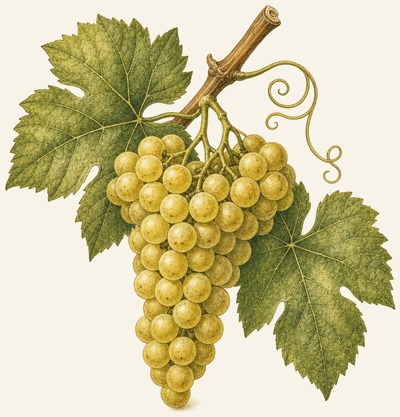
Champagne law requires every grape to be picked by hand. Most grapes have black skins, so obtaining pure white juice depends on handling them as gently as possible, with bunches kept whole and intact on their journey to the press. This need for care guides everything from the first morning of harvest.
2. Pressing
The grapes are pressed gently
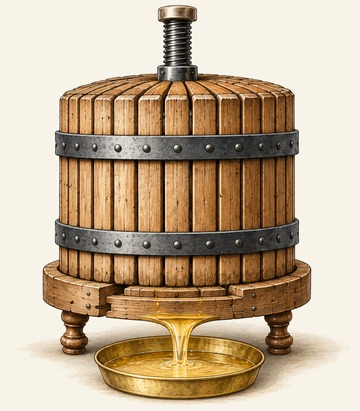
Each batch weighed out at the press house contains 4,000 kilos of grapes, with a juice limit of 25.5 hectoliters. Pressing begins with the finest portion, known as the cuvée, followed by the smaller taille, whose character is fruitier and broader. For many houses, the cuvée is the only portion they keep.
3. First Fermentation
Base wine takes shape
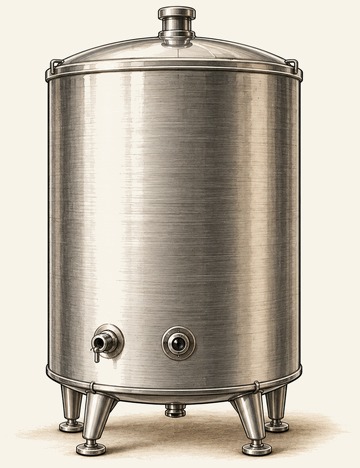
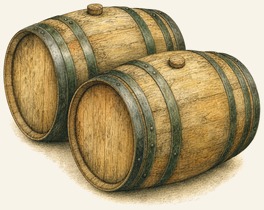
In tanks or old barrels, the juice ferments into a still white wine. If you tasted it now, you would find it lean and sharp, almost severe — and that is exactly what the winemaker wants. All of that freshness is being banked on purpose, because this wine has a long journey ahead, and it will need every bit.
Most young wines now go through a second, gentler change called malolactic, in which the sharpest acid softens into a creamier one. Some producers welcome the roundness it brings; others skip it, guarding every bit of freshness for the decades ahead. Neither is wrong — it is a house's first signature.
4. Blending
Blending gives the house its style
A champagne that tastes consistent from year to year reflects the cellar master’s skill in blending, a craft at the heart of the tradition. To bring that familiar character to the wine, they taste dozens — sometimes hundreds — of young wines drawn from different years, grapes and villages. Older reserve wines also help them build a blend whose parts come together in harmony, carrying the house style from one year into the next.
5. Second Fermentation
The bubble is born
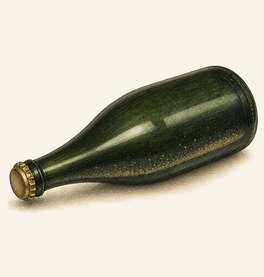
The finished blend is poured into the bottle it will live in from now on — the same bottle that will someday reach your table — along with one small gift: a spoonful of sugar and a little living yeast. The cellar master seals it with a simple crown cap, the kind a beer bottle wears, and lays it down in the dark. Everything champagne will become is now inside, waiting.
Inside the sealed bottle, the yeast wakes and begins to eat that sugar, breathing out carbon dioxide as it goes. The gas has nowhere to escape, so it dissolves into the wine itself, building to about six atmospheres of quiet pressure. The sparkle is grown inside the bottle — it is never added to it.
6. Lees Ageing
The wine develops as bottles rest
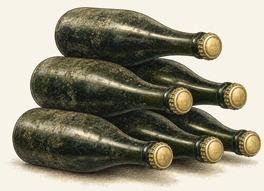
In the cool of the chalk cellars, the bottles lie undisturbed while the settled yeast gradually releases compounds that help give champagne its familiar fresh bread, cream and brioche flavors. Champagne must age for at least fifteen months by law, or three years for a vintage, though the bottles that stay fondly in our memory have usually been given much longer.
7. Riddling & Disgorgement
The yeast sediment is collected and removed
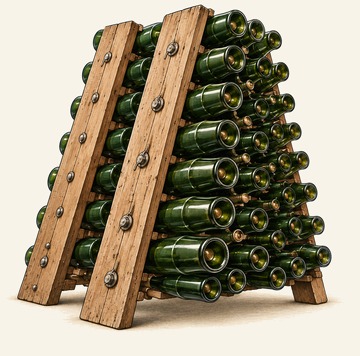
Removing the fine sediment of spent yeast means gathering it in the bottle’s neck while keeping the sparkle in the wine. Gradual tilting and turning bring it all together there, a process that takes weeks when done by hand on wooden racks, or days when a machine does the work.
With the bottle upside down, an icy bath freezes the sediment in its neck into a small plug. Removing the cap lets the pressure expel that frozen plug in an instant, leaving the champagne perfectly clear.
8. Dosage
The final addition determines sweetness
Dosage replenishes the small amount of wine that escapes as the sediment is expelled, using wine and usually a measured amount of sugar. It determines the sweetness shown on the label, ranging from bone-dry brut nature to dessert-sweet doux; you’ll find the complete range on the Reading the Label sheet.
9. The Finished Wine
The cork and cage come before rest
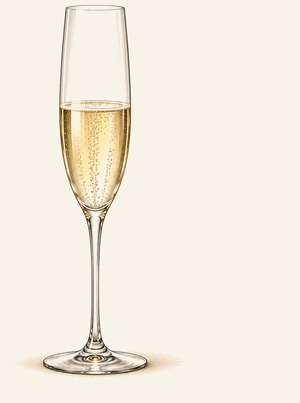
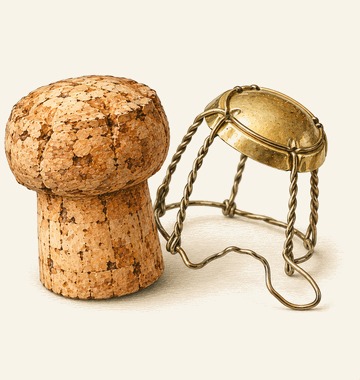
Once the final cork is fitted, a wire cage called a muselet holds it in place. Unwinding it traditionally takes six half-turns, though guides count this differently — it is custom rather than a rule. The bottle then spends a little longer at rest, allowing the wine to settle and its elements to come together before it travels to you, ready to be chilled and gently opened at your table one evening.
The Law
Two requirements for making Champagne
Champagne leaves almost everything open to choice, but these two requirements are fixed.
Four thousand kilos of grapes may yield 25.5 hectolitres of juice and not a drop more. The first 20.5 are the cuvée, the clean heart of the pressing; the last 5 are the taille, deeper and coarser, used sparingly or sold on.
For a non-vintage, the minimum ageing period is fifteen months; for a vintage, it is thirty-six. Both are counted from tirage, when the wine is bottled with its yeast, and well-regarded houses allow longer rather than aiming for the minimum.
The Chalk Sea · Champagne Atlas © 2026 James Gill, DipWSET · drawn in the spirit of Larmat · thechalksea.com